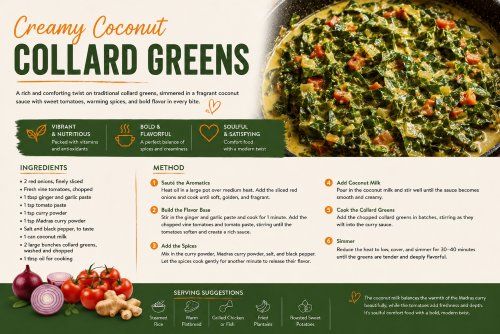
There’s something truly special about a pot of collard greens slowly simmering on the stove. The rich aroma fills the kitchen with warmth, comfort, and the kind of soulful flavour that instantly makes a house feel like home. In our kitchen, collard greens are more than just a side dish — they’re a tradition, a celebration of culture, and one of our favourite ways to bring family together around the table.
This week, we’re sharing our love for collard greens, along with a few simple tips to help you prepare them perfectly at home.
What Are Collard Greens?
Collard greens are large, leafy vegetables from the Brassica family, closely related to kale, cabbage, and broccoli. Known for their rich green colour, hearty texture, and earthy flavour, collard greens have long been a beloved ingredient in many East African kitchens. Across countries like Kenya, Uganda, and Tanzania, leafy greens are a staple part of everyday cooking, often prepared with onions, tomatoes, coconut milk, and warming spices to create nourishing, flavourful meals.
In East African homes, greens are more than just a side dish — they represent comfort, tradition, and community. Whether served alongside ugali, rice, chapati, or grilled meats, collard greens bring warmth and depth to the table. Their versatility and rich cultural roots are what continue to make them a cherished ingredient passed down through generations.
Nutrient-Packed Goodness
Collard greens are deeply nourishing and full of life-giving nutrients. They’re rich in vitamins A, C, and K, as well as calcium, iron, dietary fiber, and powerful antioxidants. In many African and African diasporic food traditions, leafy greens like collards are valued not just as food, but as strength for the body—hearty, healing, and naturally low in calories while still deeply satisfying.
Versatile and Full of Flavour
One of the beautiful things about collard greens is how they adapt across kitchens and cultures, carrying flavour in every direction.
Slowly simmered with smoked or seasoned meat for that deep, soulful richness
Lightly sautéed with garlic, onions, and palm or olive oil for a simple, fragrant side
Stirred into soups, stews, and pepper-based sauces for added body and depth
Wilted or gently massaged for fresh salads with a tender bite
From slow, patient cooking to quick, vibrant preparations, collards carry warmth, comfort, and tradition in every bite.
Affordable, Hearty Comfort Food
Collard greens have long been a humble staple in many African and diaspora households—accessible, filling, and able to stretch across a table with ease. A few bunches can nourish a whole family, making them a true symbol of resourceful, home-cooked comfort. They remind us that rich flavour and deep satisfaction don’t require extravagance—just care, seasoning, and time.
How to Prepare Collard Greens
Wash Thoroughly
Collard greens can hold a surprising amount of dirt between their leaves, so washing them properly is essential. Fill a large bowl or clean sink with cold water, swish the leaves around gently, and lift them out carefully. Repeat until the water runs completely clear.
Remove the Stems
The thick center stem can be tough and fibrous. Fold each leaf in half lengthwise and carefully slice along the stem to remove it before cooking.
Chop or Tear the Leaves
Stack the leaves, roll them tightly, and slice into thin ribbons for a classic look. Prefer a more rustic texture? Simply tear them by hand instead.
Final Thoughts
Collard greens are more than just a comfort food favourite — they’re a reminder that simple ingredients often create the most meaningful meals. Whether you grew up eating them at Sunday dinner or you’re trying them for the first time, collards bring warmth, flavour, and tradition to every table.
From my kitchen to yours, I hope this inspires you to cook a pot of greens and enjoy every soulful bite.